
Career Pathways & Information for Students
According to statistics tracked each year in ACS’s Digital Pulse publications, IT and Digital industries offer students the highest average wage of any Australian sector. Tech workers earn $21 an hour more than the average, and Tech also has the equal highest rate of job growth of all sectors. They also make up 5% of Queensland’s current workforce. (acs.org.au/campaign/digital-pulse.html).
However, despite these positives, research in ACS’s Digital Pulse predicts that an increase of over 30% is needed by 2035 to meet the expected needs of the Industry just at a time when the QCAA reports there has been a fall of 22% since 2020 in the number of students finishing tech subjects in year 11 and 12.
This shortage points to an opportunity for all students to either specialise in needed skills in areas such as Cyber, Data and AI, or to employ such skills to boost their employability in other industries, using resources and activities like those we have curated below.
Digital Career Pathway Resources
Right now, almost half of today’s jobs are set to be impacted by technology. 40% of Australia’s best paid jobs are in ICT – jobs of the future will all involve ICT skills. All industries have been impacted by technology and those workers with ICT skills will be best positioned for the jobs in the Fourth Industrial Revolution. Start planning your tech career right here, right now!
- The Hack Your Future video series - Hear from young professionals about how they succeeded in starting rewarding digital careers
- The ACS Foundation - Tech careers, scholarships, graduate placements
- The BiG Day In - In-person tech careers events in 3 Queensland locations
- Instructional tech videos and free online skills development courses
- The Digital Pulse – A tech careers report
- Access the Digital Professional Workforce Action Plan
- Complete a personality survey to discover your perfect digital career role
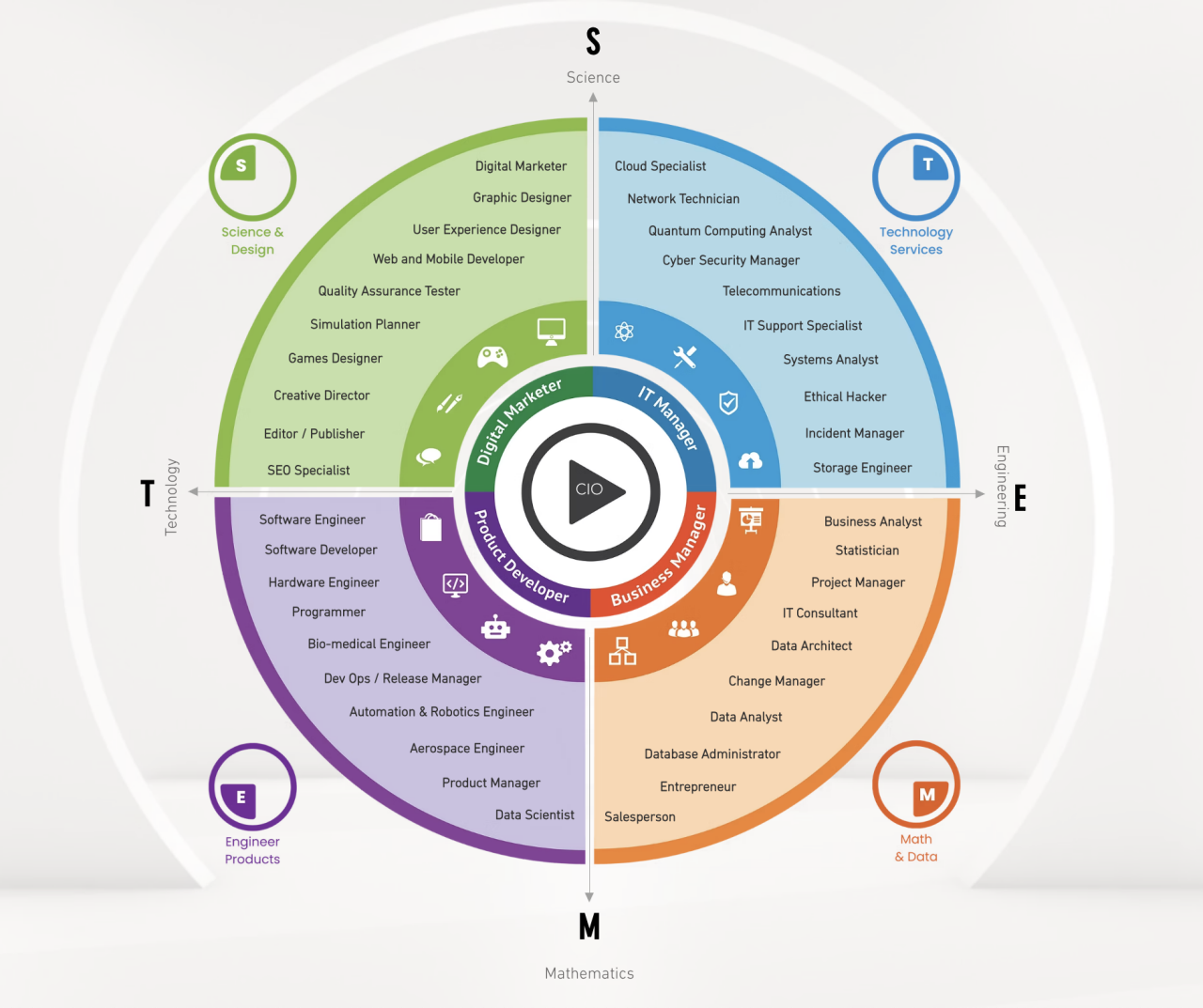
- The STEM Careers Wheel for Students is a resource to assist students in identifying pathways for study and employment that suit their interests. It groups job roles with TAFE and University qualifications, and the wheel and map communicate the linkage from study to work.
The ICT Careers Wheel for Students is a resource to assist Australian Secondary School students in identifying pathways for study and employment in the technology sector. There are several pathways into the roles within the tech sector, and by grouping job roles with TAFE and University qualifications, the wheel and map communicate the linkage from study to work.
Vocational Pathways
There are nationally recognised pathways for high school students, such as Australian School-based Apprenticeships and Traineeships, or for post-secondary school studies in Information Technology courses at TAFE Qld and other Registered Training Organisations that will help to prepare you for a role within the tech workforce.
Higher Education Pathways
The Queensland technology workforce is expected to grow by nearly 3%, equivalent to 13,000 new positions, over the next four years, however, research shows that at the end of 2017 just over 1,000 university graduates were successfully completing their ICT degrees at an Australian University.
ICT Roles of the Future
Industry Name 1
Vocational Education Pathway
- Career pathway option #1
- Career pathway option #2
- Career pathway option #3
- Career pathway option #4
Higher Education Pathway
- Career pathway option #1
- Career pathway option #2
- Career pathway option #3
- Career pathway option #4
Industry Name 2
Vocational Education Pathway
- Career pathway option #1
- Career pathway option #2
- Career pathway option #3
- Career pathway option #4
Higher Education Pathway
- Career pathway option #1
- Career pathway option #2
- Career pathway option #3
- Career pathway option #4
Industry Name 3
Vocational Education Pathway
- Career pathway option #1
- Career pathway option #2
- Career pathway option #3
- Career pathway option #4
Higher Education Pathway
- Career pathway option #1
- Career pathway option #2
- Career pathway option #3
- Career pathway option #4
Industry Name 4
Vocational Education Pathway
- Career pathway option #1
- Career pathway option #2
- Career pathway option #3
- Career pathway option #4
Higher Education Pathway
- Career pathway option #1
- Career pathway option #2
- Career pathway option #3
- Career pathway option #4
Digitech Career Pathways – Overview guide for schools
This guide categorises the best activities utilised at ICT GISP schools by industry pathways:
- Robotics and Mechatronics
- Cybersecurity
- Game development and Esports,
- AI and Machine Learning
- 3D spatial AR/VR tech
Find the guide at https://tinyurl.com/Digitech-pathways, or email Jonathan Nalder for a copy.
Please note: The guide is in draft as schools submit further ideas to be added
The A – Z list of ways to jumpstart your tech career
Many tech professionals have followed their own learning pathway into a tech career. This means that they have learned on the job as technology advanced and kept their skills current through constantly learning in the workplace and by doing online courses.
Online learning can be done as part of a tertiary study course, through a paid platform, via open learning (free) courses or by playing in online sandboxes or testing environments.
You do not need to wait until you leave school to build your knowledge and skills with the technologies, platforms and coding languages used in the workplace. Try out these free and paid courses to suit your interests:
- ACER
- Cisco Skills for All student courses
- Coursera
- Coursera: Introduction to Programming
- CSER Cyber Security and Awareness MOOC
- Grok Academy
- Grok Academy Cyber Security Courses
- Khan Academy
- LinkedIn Learning
- Microsoft MakeCode
- Microsoft’s Python tutorial
- MIT OpenCourse
- Palo Alto Networks Cyber A.C.E.S. curriculum
- Udemy
- Zenva Academy Free Courses